Identify coat structure before setting frequency
Use the coat you can see and feel rather than relying on breed labels alone. Smooth coats lie close to the body. Long or silky coats develop friction tangles. Curly coats can hide knots near the skin. Double coats hold a soft underlayer beneath guard hairs. Wire coats have their own maintenance needs.
The Daily Pet Care Guides hub connects brushing with the rest of home care. This page answers frequency. Tool buying belongs in dog brush types by coat, and detailed handling belongs in brushing technique for your dog’s coat.
Use a starting cadence, then watch the coat
Long, curly and tangle-prone coats often need checks several times a week and may need near-daily attention in friction areas. Double coats may need more frequent work during heavy shedding. Many smooth or short coats can start with a lighter weekly rhythm.
Treat these as starting points. Increase care when you find loose undercoat, early tangles, burrs, mud or moisture. Maintain the cadence when the brush moves comfortably, the skin stays calm and the coat remains manageable.
Adjust for season and lifestyle
Shedding season, wet weather, outdoor activity, harness friction and time in brushy areas can shorten the interval between checks. A dog that swims or comes home damp needs complete drying and a coat check even when a full brushing session is not due.
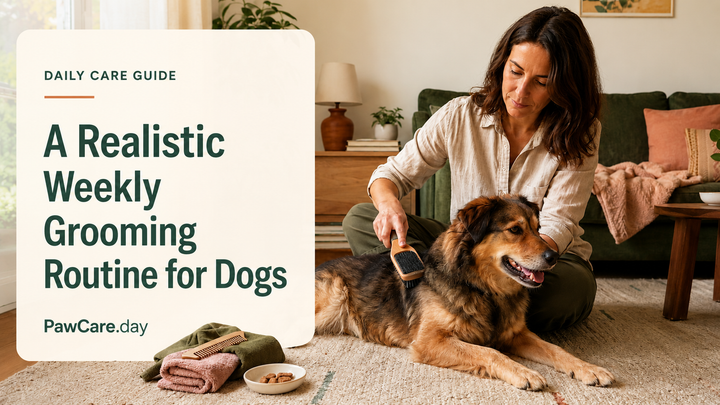
A realistic weekly dog grooming routine helps distribute these checks without turning one day into a long session. Short-haired dogs can use a short-haired dog grooming routine for a lighter full plan.
Protect comfort as frequency rises
More frequent brushing only helps when the pressure, tool and technique fit the coat. Work in small sections. Keep the skin visible where possible. Stop before repeated passes make one area red or tender.
Pulling away, freezing, lip licking, guarding or a sudden refusal can mean the session is too difficult. It can also signal pain. Change one variable at a time: tool, pressure, body area, surface or duration.
Pause for mats, skin changes or pain
Do not pull through a tight mat or use scissors close to the skin. Severe matting is safer with a professional groomer. Redness, sores, sudden hair loss, persistent itching, odor or pain during brushing needs veterinary advice.
After the frequency is clear, browse Grooming for a tool that matches the coat and job.
Increase, maintain or pause decision tree
| Signal | Decision | Next step |
|---|---|---|
| Loose hair, early tangles or debris returns before the next session. | Increase | Add a brief check or smaller section. |
| Coat stays manageable and skin remains calm. | Maintain | Keep the current cadence. |
| Redness, pain, sores, sudden hair loss or tight mats. | Pause | Stop home brushing and seek the right professional. |
| Dog becomes distressed before the coat is finished. | Revise | Shorten the session and review tool, pressure and setup. |
Dog brushing frequency: frequently asked questions
How often should I brush a short-haired dog?
Many smooth or short coats can start with a light weekly brushing rhythm. Increase checks when shedding, outdoor debris, mud or moisture builds up sooner.
How often should I brush a long-haired or curly dog?
Long, silky, curly and tangle-prone coats often need attention several times a week. Friction areas behind the ears, under a harness, in the armpits and around the legs may need near-daily checks.
How often should I brush a double-coated dog?
Use the coat’s condition as the guide and increase brushing during heavy shedding, when loose undercoat returns quickly. Do not keep repeating passes once the skin or coat becomes irritated.
Can I brush my dog too often?
Yes. Frequency only helps when the brush, pressure and technique fit the coat. Redness, tenderness, pulling away, freezing or a sudden refusal are signals to stop and reassess the tool, pressure, body area or session length.
What should I do about tight mats?
Do not pull through a tight mat or cut close to the skin with scissors. Severe matting is safer with a professional groomer. Pain, sores, persistent itching, odor or sudden hair loss needs veterinary advice.
Continue caring
A realistic weekly dog grooming routine | brushing technique for your dog’s coat | a short-haired dog grooming routine
Explore the pillar: Daily Pet Care Guides | Shop with context: Grooming
How PawCare publishes
Editorial Policy | Our Product Standards | Veterinary and Medical Disclaimer | Affiliate and Sponsorship Disclosure
Sources and further reading
Verify the current wording, publication date and claim support on each source page during editorial review. AI is not a source or a veterinary reviewer.