
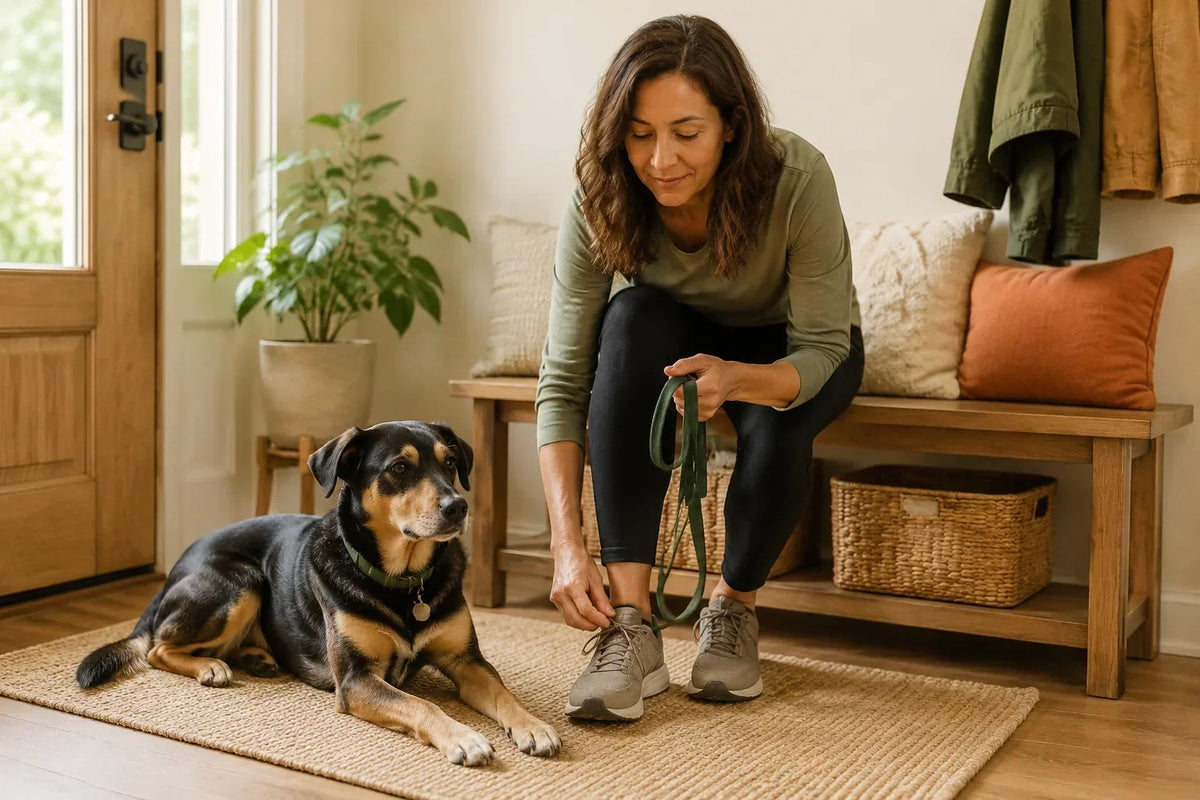
What should a daily routine for a dog include?
Start with your dog's needs, not a perfect timetable. The Ohio State University Indoor Pet Initiative describes a normal pet routine as including feeding, elimination, social play, exploration, and sleep or rest. The details vary by dog and household.
Use this seven-part checklist:
-
Toilet opportunities: Offer regular chances to go outside, including after waking and before a longer rest or absence.
-
Food and water: Keep fresh water available and follow your dog's feeding plan. Count food used for training or enrichment in the daily allowance.
-
Physical activity: Include movement suited to age, health, fitness, and interests.
-
Mental enrichment: Offer a manageable sniffing, searching, chewing, problem-solving, or training activity.
-
Social connection: Make room for calm attention, play, training, or simply being near you.
-
Care tasks: Fit grooming, dental care, medication, or a brief body check into a calm period when due.
-
Undisturbed rest: Protect a comfortable place where the dog can settle without repeated interruption.
The categories can overlap. A sniff-focused walk can provide activity, enrichment, toileting, and connection. A suitable food puzzle can combine a meal with enrichment.
Build the day around routine anchors, not exact times
A routine anchor is a recognizable event that signals what usually comes next. Waking can lead to toileting, picking up the leash to an outing, and preparing the bed to the evening wind-down.
Choose four to six anchors that already happen on most days:
-
waking and the first toilet opportunity
-
meals
-
the main activity period
-
departures and returns
-
evening wind-down
-
the final toilet opportunity and sleep setup
Keep the sequence and cues fairly stable, but use a practical time window. A walk at 7:00 one day and 7:30 the next can still be predictable when waking, toileting, breakfast, the walk, and rest happen in the same order.
Predictability is not rigidity. A flexible routine can absorb weather, work, travel, and low-energy days without dropping essential needs. If the human side keeps slipping, use keeping pet-care habits consistent to simplify the setup.
Make morning and evening transitions easy to read
Morning routine
Meet urgent needs first: toileting, water, food as directed, and an appropriate chance to move or explore. A simple morning might be toilet, breakfast, a sniff-focused walk, then quiet rest.
Prepare the leash and other supplies in advance, and decide who handles the first toilet trip. Fewer last-minute changes make the transition easier to read.
Evening routine
The evening should lead from household activity toward rest. It may include a meal, toileting, gentle connection, a short care task, and a consistent sleep setup. After a stimulating day, choose a quieter activity.
Use the same closing cues most nights: lower activity, prepare the resting space, take the final toilet trip, and reduce interruptions.
Balance physical activity, enrichment, and rest
Physical activity means body movement. Mental enrichment gives the dog a safe chance to sniff, search, solve, chew, learn, or make choices. Rest is low-interruption recovery. One cannot fully replace the others.
The RSPCA's dog-care guidance notes that activity should match health, age, athleticism, and individual needs. A universal walk duration is therefore not useful. Watch how your dog starts, participates, and recovers, and ask your veterinarian about restrictions.
The Ohio State enrichment guide for dogs includes food puzzles, sniffing, play, walks, and positive-reinforcement training. Supervise new puzzles or chews. Simplify the activity if the dog disengages, becomes frustrated, guards the item, or cannot settle afterward.
Give your dog a clean, comfortable, quiet resting place and let resting dogs rest. Constant entertainment can hide whether an activity was genuinely useful.
How can working owners plan a dog schedule?
Build the working day as four handoffs:
-
Before work: Provide toileting, water, food as directed, and suitable activity. Leave time for the dog to settle.
-
While you are away: Decide whether your dog needs a midday toilet break, walk, meal, medication, or caregiver visit. Base this on age, health, house-training, comfort alone, and absence length.
-
When you return: Begin with a calm greeting and toilet opportunity before intense play or care tasks.
-
During the evening: Meet the remaining needs without cramming everything into the last hour before bed.
The RSPCA's home-alone guidance recommends meeting toileting and appropriate activity needs before leaving and providing safe occupation. Persistent distress needs veterinary or qualified behavior help; a schedule change or puzzle is not a complete treatment plan.
Adjust the routine by life stage
The routine categories stay the same, but their timing and intensity change. AAHA's Canine Life Stage Guidelines explain that preventive care varies with age, size, lifestyle, health status, and breed.
Puppies
Puppies may need more frequent toilet opportunities, age-appropriate meals, short learning sessions, careful social experiences, and generous rest. Their needs change quickly as they grow. Ask your veterinarian for feeding, vaccination, exercise, and toileting guidance rather than copying an adult dog's schedule.
Adult dogs
For a healthy adult, review whether the day provides enough movement, exploration, connection, and recovery. Adjust when work patterns, body condition, behavior, or the home environment changes. A dog who once enjoyed a busy group walk may later prefer a quieter route; the routine should follow the dog in front of you.
Senior dogs
Senior dogs may need easier access to toileting, water, comfortable bedding, and gentler activity. Do not treat slower movement, changed sleep, reduced appetite, or new reluctance as a scheduling inconvenience. A comfortable daily routine for a senior dog should be shaped by observation and veterinary advice.
Adjust for size, breed-related traits, health, and weather
Breed and size can influence body shape, maturation, stamina, temperature tolerance, and preferred activities, but they do not generate a complete schedule. Small dogs still need meaningful movement, exploration, and social contact. A large dog is not automatically a high-intensity dog. Dogs bred for scent, retrieving, herding, or other work may enjoy activities that use those tendencies, yet the individual dog's response matters more than the label.
Use size to choose safe equipment and spaces, then use behavior and recovery to set intensity. Shorten, cool, or move activity indoors when weather makes the usual plan unsuitable. Follow veterinary restrictions for dogs with breathing, heart, joint, neurological, metabolic, or recovery needs. The predictable part can remain the cue and sequence even when the activity itself changes.
How do you know whether the routine is working?
Review the pattern, not one imperfect day. A workable routine usually lets the dog meet daily needs, participate willingly, and settle between activities. Track changes in appetite, drinking, toileting, sleep, movement, recovery, and willingness to engage.
Change one part at a time. If your dog is restless in the evening, first ask whether rest was interrupted, toileting was delayed, or the day's activity was poorly matched. Do not automatically add more exercise. If a sudden behavior or routine change comes with pain, appetite changes, digestive signs, breathing difficulty, unusual thirst, sleep disruption, or reduced mobility, contact your veterinarian.
Three flexible sample daily routines for dogs
|
Routine anchor |
Standard day |
Busy day |
Low-energy day |
|---|---|---|---|
|
Morning |
Toilet, meal as directed, walk or exploration, then rest. |
Toilet, meal, short sniff-focused outing, then settle. |
Toilet, meal, gentle movement, then protected rest. |
|
Midday |
Toilet opportunity, water check, brief enrichment, rest. |
Arrange suitable support or offer a prepared safe activity. |
Toilet and water check, calm connection, rest. |
|
Return home |
Calm greeting, toilet, measured activity or exploration. |
Calm greeting, toilet, then the minimum useful activity. |
Calm greeting, toilet, quiet companionship. |
|
Evening |
Meal, connection, care task if due, wind-down. |
Meal, brief connection, simple care, wind-down. |
Meal, comfort check, final needs, early wind-down. |
|
Night |
Final toilet opportunity and consistent sleep setup. |
Keep the same closing sequence. |
Keep the same closing sequence with easier access. |
Treat these as frameworks, not prescriptions. Feeding, medication, exercise, and toilet frequency may need an individual plan.
Quick answers about dog daily routines
Does a dog need the exact same schedule every day?
No. Keep the important sequence and cues recognizable while allowing reasonable time windows. Essential medical or feeding instructions stay fixed when your veterinarian says they must.
What needs to happen at consistent times?
Prioritize needs that cannot wait comfortably, such as veterinarian-directed medication or feeding, appropriate toilet opportunities, and reliable access to water. Other activities can usually sit within a predictable window.
How much flexibility can a dog routine have?
Enough to fit normal household life while still meeting the dog's needs. If the clock changes, preserve familiar anchors, locations, cues, and the next step.
How much exercise should be in a dog's daily routine?
There is no safe universal duration. Match activity to the dog's age, health, fitness, body shape, weather, interests, and recovery. Ask your veterinarian for individual limits.
What if my dog cannot settle even with a routine?
Check whether toileting, activity, enrichment, social contact, and rest are balanced. Persistent pacing, vocalizing, destruction, house-soiling, panic, or a sudden change deserves veterinary or qualified behavior support.
Does this routine also apply to cats?
No. Cats need a species-specific routine and environment. Use dedicated feline guidance rather than adapting a dog schedule.